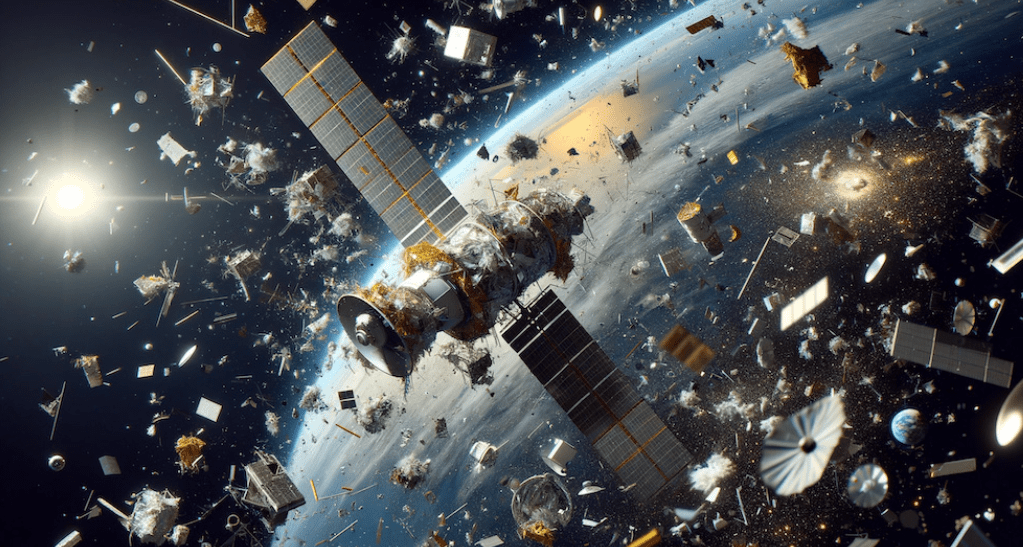
The commercial space sector has expanded swiftly in recent years, resulting in a significant increase in the number of launches and satellites in orbit. This expansion presents new business prospects and innovative methods for monitoring environmental conditions and human activities. However, it also brings sustainability challenges, both on Earth and in space. The most important challenge is happening right above our heads, in space, where orbital debris is rapidly accumulating.
Recent Developments
The space industry is currently experiencing a surge largely driven by billions of dollars in private investment, leading to a rapid increase of startups focused on various facets of space exploration, including rocket development and satellite systems. A significant contributor to this growth is the decreasing cost associated with launching satellites into low Earth orbit.
Previously, companies faced expenses in the hundreds of thousands of dollars. Now, companies at the frontier of space tech such as SpaceX’s have come up with an innovative approach to reusing rocket stages, driving launch costs down to as low as $1,300 – per pound of payload. This decrease in cost has not only democratized access to space for a broader array of entrepreneurs but it has also raised awareness of adoption of sustainable engineering practices aimed at safely utilizing space and spacecraft technology for future generations.
Space Debris: A growing threat to Sustainability
The affordability of space access has led to the deployment of large satellite constellations which enhance global connectivity. However, the sheer number of satellites in these constellations also raise critical sustainability concerns regarding orbital debris and its impacts.
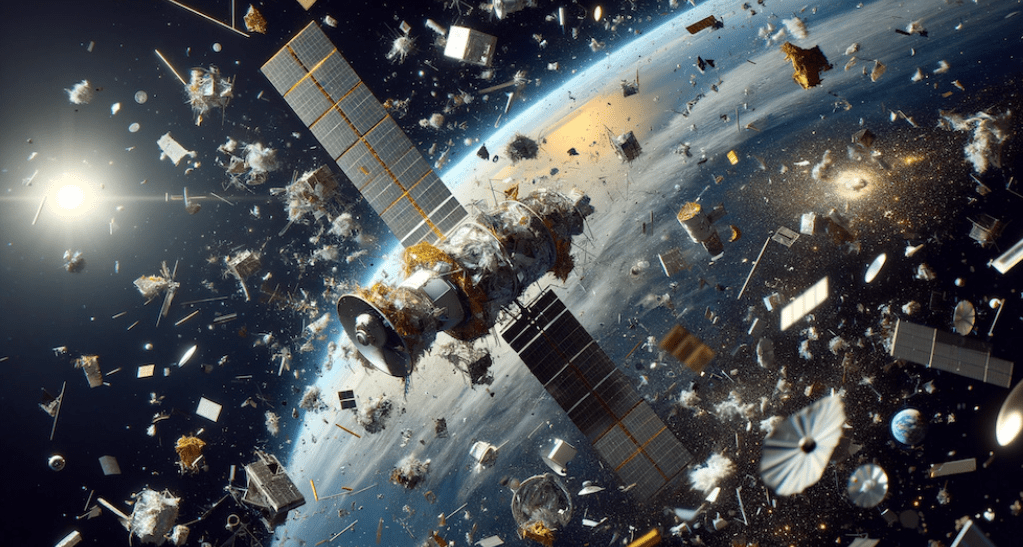
Space debris consists of defunct satellites, spent rocket stages, and fragments resulting from collisions or anti-satellite weapon tests. This debris, also known as space junk, poses a significant threat to future space operations. How? You ask. Well, as the number of satellites and other spacecrafts in orbit continues to increase, the potential for these objects to become debris also rises.
The recent destruction of Russia’s Kosmos 1408 satellite from 1982 during a test has further increased this problem, creating over 1,500 pieces of trackable orbital debris.
Image credit: (A Crowded Canvas: Navigating the Peril of Space Debris for a Sustainable Future, GCPIT.)
Effects of Space Debris
The effects of this debris has raised serious concerns for the safety of the International Space Station (ISS) crews’ future space activities. In November 2021, the ISS crew was forced to take shelter in their respective spacecraft as a precautionary measure when the station passed close to a field of debris. This incident highlighted the urgent need for better communication and coordination between spacefaring nations to ensure the safety of astronauts and cosmonauts.
Space debris could also potentially lead to a catastrophic chain reaction known as the Kessler Syndrome . In a study, titled “Collision Frequency of Artificial Satellites: The Creation of a Debris Belt,” Kessler and co-author Burton Cour-Palais noted that the likelihood of satellite collisions increases as more and more spacecraft are launched into orbit. This will then become a never-ending cycle and a proper depiction of the tragedy of commons where our recently unfettered access to a valuable resource such as a space, and its overuse may end up destroying its value altogether.
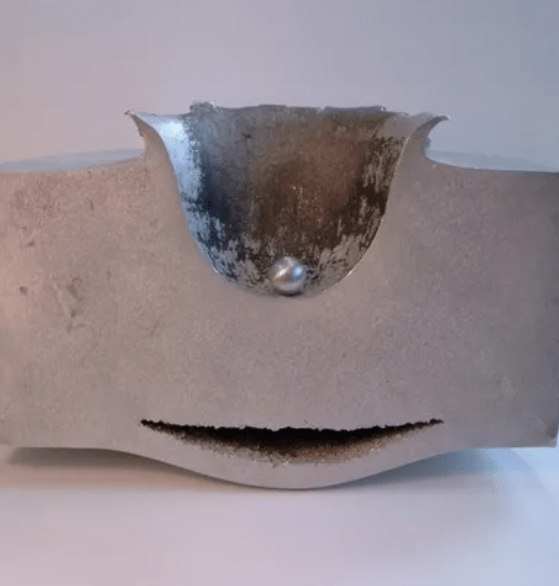
It is the tiny pieces of space debris that have the most catastrophic effects. Despite their small size, the incredible velocity of space junk objects gives them a serious punch. The image on the left shows the result of a hypervelocity lab-test between a block of aluminum (a common material in spacecrafts) and a small aluminum sphere traveling at nearly 25200 km/h . Image credit: ( ESA)
Currently, there are over 20,000 known and tracked pieces of space debris orbiting Earth, each one traveling at about 15,000 mph (24,000 km/h). They pose a risk to future space missions, and cleaning them up is too hard. An estimated 100 tons of space debris makes it to Earth’s surface every year (though most of it falls into the ocean and does not pose a risk to humans).
Only sustainable engineering approaches can significantly mitigate the risks associated with space debris and prevent Kessler Syndrome from becoming a reality. International collaboration amongst nations and private companies on technology development, data sharing, and regulatory frameworks is essential for creating a sustainable space environment.
Strategies for Mitigating Space Debris
The European Space Agency has come up with a Zero Debris approach aimed at eliminating new debris production by 2030 through strategies such as;
Active Debris Removal (ADR): Engineers are exploring technologies for actively removing space debris. Safeguarding the disposal of space objects is critical to ADR. This includes robotic arms, harpoons, and lasers designed to capture and de-orbit defunct satellites or large debris objects. Implementing ADR systems could significantly reduce the existing debris population and help prevent future collisions.
Designing for Demise: Developing satellites with features that facilitate their natural de-orbiting is essential. It is generally recommended that satellite companies confirm that successful self-disposal of their spacecrafts exceeds a minimum threshold (currently 90%) to continuously propagate essential disposal operations. Additionally, systems should be in place to facilitate removal if deorbiting efforts fail, as components may still malfunction and hinder successful maneuvers. Engineers can also use materials that burn up more readily upon re-entry, thereby reducing long-term debris in orbit.
Collision Avoidance Systems: Engineers can design spacecraft equipped with advanced collision avoidance systems that utilize sensors and AI algorithms to detect potential collisions with debris and maneuver accordingly. This proactive approach enhances safety during missions and reduces the likelihood of creating new debris.
Passivation of Satellites: Sustainable engineering practices can ensure that satellites are properly decommissioned at the end of their operational life. This involves procedures such as depleting onboard fuel and batteries to minimize the risk of explosions that could generate additional debris. Strategies such as enhanced satellite health monitoring should be implemented to prevent internal break-ups caused by these system explosions.
Estimated Market Value of Space Debris Removal
The Global Council for the Promotion of International Trade projected that the market for space debris removal and related technologies is bound to experience significant growth, with an estimated value of USD 12.8 billion by 2027. This market is expected to expand at a Compound Annual Growth Rate (CAGR) of over 15%. The space debris removal market can be divided into several segments, each presenting unique business opportunities:
- Debris Removal Technologies
- End-of-Life (EOL) Satellite Management
- Space Situational Awareness (SSA) Systems
- Materials Science
Role of Engineers in Sustainable Space Debris Removal
- Aerospace Engineers: They lead the design and development of spacecraft and satellite systems that prioritize sustainability through innovative materials and technologies aimed at minimizing environmental impacts of space debris.
- Systems Engineers: Responsible for integrating various subsystems within spacecraft, systems engineers will ensure that collision avoidance systems and ADR technologies are effectively implemented.
- Robotic Engineers: These engineers develop robotic systems capable of performing ADR tasks, such as capturing and removing debris from orbit.
- Policy Engineers: Engineers involved in policy-making will advocate for international cooperation on space debris mitigation strategies, ensuring that sustainable practices are adopted globally.
 Sustainable Engineering
Leave a comment